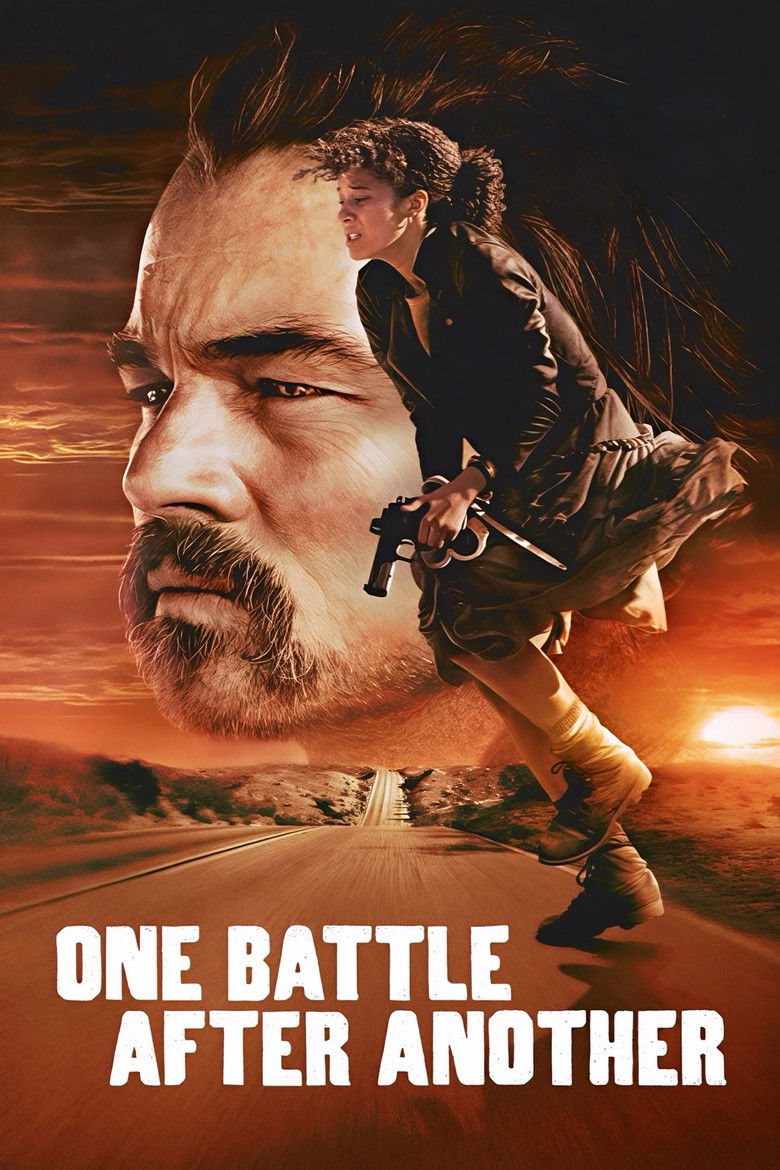
Paul Thomas Anderson has spent his career making films about men who have power they do not know how to use — men whose capability outstrips their wisdom, whose ambition outruns their understanding, whose certainty about their own importance is the engine of their destruction. One Battle After Another is something different: a film about a man who has no power, who has arrived at middle age without the authority he spent his life believing he was building toward, and who must now figure out who he is without it.
Adam Sandler plays a father returning to his adult children after years of absence. The specific reasons for the absence are disclosed slowly, and the film is careful not to rehabilitate him before the disclosure. You meet him in his diminishment first. Only after you have spent time with who he is now does the film show you who he was — and the gap between the two is the film’s subject.
The Pop Score
Rating based on impact and craft.
Sandler’s Performance
Sandler has been doing extraordinary work in serious films for over a decade — Uncut Gems established the template, and Hustle and Punch-Drunk Love preceded it. What distinguishes his performance in One Battle After Another is its specificity about a particular kind of male failure: not the spectacular failures of addiction or crime, but the slow failure of someone who kept prioritizing the wrong things until the things that actually mattered had grown up and stopped waiting for him.
He plays the character without softening. He does not perform remorse in ways that ask for immediate absolution. He shows up, and he is present, and he does not pretend to have earned the welcome he is hoping for. This restraint is the hardest kind of acting — to play a character who wants to be forgiven without manipulating the audience into forgiving them prematurely.
Anderson’s Direction
Anderson’s recent films — The Master, Phantom Thread, Licorice Pizza — have moved progressively toward a kind of formal patience, a willingness to let scenes breathe far past the point where conventional editing would cut away. One Battle After Another extends this tendency. There are scenes here that go on for minutes past the point where the narrative information has been delivered, and the extension is the point: what people do when the scripted moment has passed, when they are still in the room and still have to be themselves, is where the truth lives.
The father and his youngest daughter have a sequence late in the film — a drive, mostly in silence, with occasional conversation that circles around what neither of them can say directly — that is one of the finest scenes Anderson has made. It contains nothing that would look significant on a synopsis. In context, it contains everything the film has been building toward.
What the Film Is About
The film is, at its most fundamental level, about the experience of being someone your children have learned to live without — and the specific, humbling work of becoming someone they might choose to include. This is not a redemption arc. There is no moment where the father has redeemed himself. There is a series of moments where he does the available thing, and the film asks whether that is sufficient, and declines to answer cleanly.
One Battle After Another (2025). Director: Paul Thomas Anderson. Starring: Adam Sandler. This review reflects the personal opinion of the author.


コメント