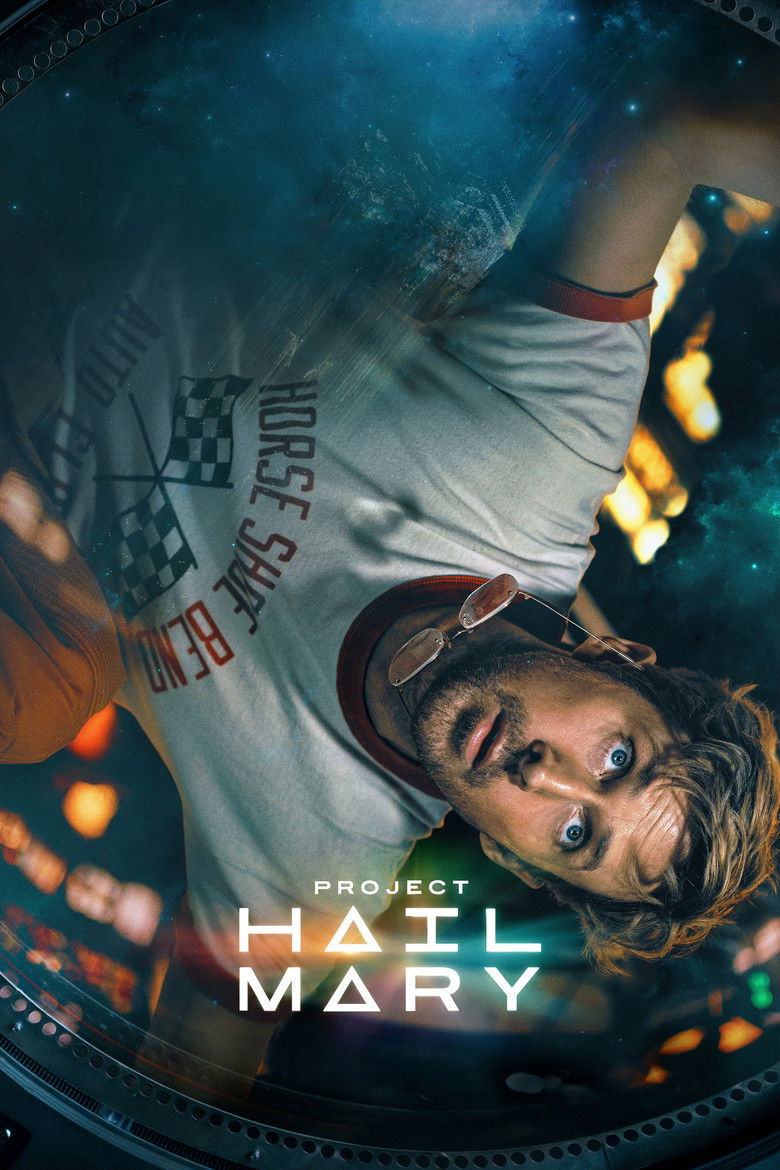
There is a moment in Project Hail Mary — it arrives without announcement, somewhere in the film’s middle section — when you realize you have stopped watching a survival story and started watching something else entirely. A film about loneliness has become a film about its opposite. About what it means to find, in the most improbable place and in the most improbable form, someone who is curious about the same things you are curious about.
This shift is the film’s entire project, and it achieves it so naturally that you barely notice it happening. When you do notice — when you look back at the scene and understand what has just changed — the effect is considerable.
The Pop Score
Rating based on impact and craft.
The Setup
Ryland Grace (Ryan Gosling) wakes alone on a spacecraft. He does not know who he is or how he got there. His body is in poor condition. The ship appears to be operating autonomously. Through a process of gradual, terrifying discovery, he pieces together his situation: he is the last surviving member of a mission to find a solution to a stellar phenomenon that is slowly killing the sun, which is slowly killing the Earth. He is millions of miles from home. There is no rescue mission. There is no way back.
The film is adapted from Andy Weir’s 2021 novel, directed by Phil Lord and Christopher Miller. Weir writes scientists with a specific quality of enthusiasm — a pleasure in problem-solving that transcends the stakes attached to those problems. The film captures this. Watching Grace work through the physics of his situation, building from first principles in a damaged spacecraft with no one to talk to, you feel the pleasure of competence applied to an impossible problem.
Ryan Gosling in Sustained Solo Performance
Gosling is on screen for virtually the entire film, much of it alone. This is a technical challenge as much as a dramatic one — there is no one to react to, no conversation to carry, no relationship to anchor the performance in. What Gosling does instead is build an interior life detailed enough to be legible from the outside. You know what Grace is thinking. You know when the calculations are going well and when they are not. You know what he misses.
Gosling has spent his career finding the specific weight of different kinds of male loneliness. He uses that gift differently here. Grace is not despairing. He is frightened, and purposeful, and occasionally even funny — not as a defensive reflex but as a genuine expression of the quality of his mind. The performance is about someone discovering that he is capable of more than he knew, and finding something like gratitude in that discovery.
Rocky
To say more about Rocky — the other major presence in the film — would be to rob you of the experience of meeting them. What I can say is that the relationship that develops between Grace and Rocky is the film’s entire heart, and that it is built with patience and specificity that the film’s final emotional payoffs require.
Most science fiction treats first contact as a military or political event. Project Hail Mary treats it as a personal one. Two minds find themselves in the same place, discover they have something in common, and proceed from there. The film trusts that this is sufficient. It is more than sufficient.
On the Film’s Commitment to Warmth
Science fiction sometimes treats human connection as something that survives in spite of the genre’s cold logic — as an irrational holdover from a less rigorous mode of storytelling. Project Hail Mary treats it as the point. The scientific problem is real and urgent, and the film takes it seriously. But the film’s argument — the thing it wants you to leave the theater believing — is that intelligence, wherever it appears, tends toward curiosity and care. That these are not incidental features of consciousness but central ones.
I left believing this more than I did when I arrived. That is a significant thing for a film to accomplish.
Project Hail Mary (2025). Directors: Phil Lord, Christopher Miller. Starring: Ryan Gosling. This review reflects the personal opinion of the author.


コメント