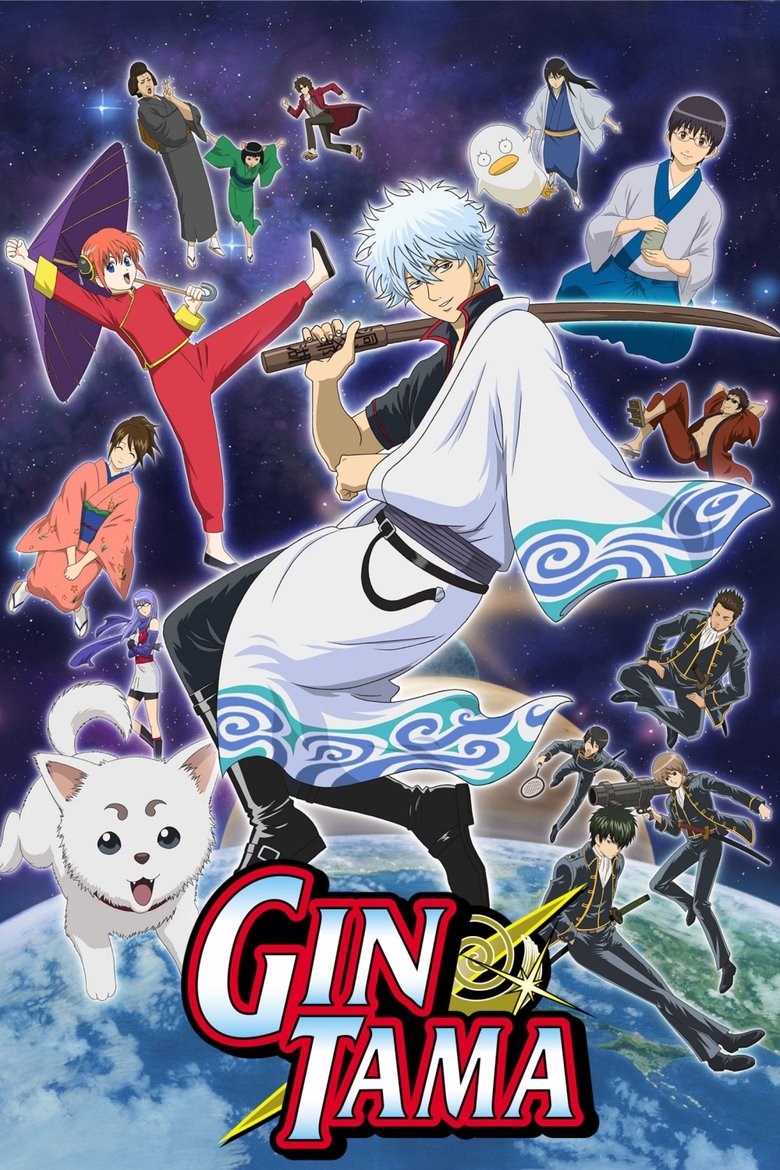
There is a problem with recommending Gintama to someone who has not seen it. The problem is that the show’s greatness is inseparable from its willingness to be bad — to be genuinely, deliberately, gleefully bad — and then, without warning, to be devastating. If you can tolerate the bad parts, the devastating parts land harder than almost anything else in the medium. If you cannot, you will have abandoned the show long before it earns your patience.
Gintama° is the third major anime season, produced by Bandai Namco Pictures and airing in 2015-2016. By this point the series has settled into supreme confidence in its own method. The parody arcs are sharper. The gag density is higher. And the serious arcs — the Shogun Assassination arc, the Farewell Party arc, the Shinsengumi Crisis arc — are among the finest sustained dramatic storytelling in anime.
The Pop Score
Rating based on impact and craft.
What Gintama° Does Differently
Most shows that pivot between comedy and drama handle the transitions clumsily — either the comedy undercuts the drama or the drama retroactively sours the comedy. Gintama understands that the comedy and the drama are doing the same thing by different means. Both are about the same characters navigating a world they cannot fully control, using whatever tools they have available. The comedy is not a break from the drama. It is the drama in a different register.
This is most visible in Gintama°’s handling of the Shogun Assassination arc — a long, dense, politically complex storyline that asks the show’s established cast to act in ways that are genuinely costly. The arc works because the series has spent years building these characters across comedy and drama simultaneously. You know who they are well enough to understand what their choices mean.
Gintoki Sakata
Gintoki is one of the medium’s great characters, and Gintama° is the season where this becomes inarguable. He is built as a series of contradictions — lazy and capable, indifferent and loyal, funny and broken — that the show has been patient enough to develop over years before pressing on them.
The comedy is the armor he wears. The serious arcs are about what happens when the armor is removed — when situations arise that cannot be handled with a joke and a wooden sword, when the people he cares about are in danger that requires something he has been trying very hard not to be. Watching the armor come off is the emotional payoff for everything that preceded it.
On the Show’s Formal Intelligence
Gintama° also demonstrates the series’ formal sophistication in ways the earlier seasons gestured at but didn’t fully realize. The show knows how to time a joke for maximum deflation of pomposity. It knows how to transition from a gag to a genuine moment without whiplash. It knows that a character who has been funny for a hundred episodes becomes exponentially more devastating in a moment of real grief.
These are not accidental achievements. They are the product of years of craft in service of a very specific emotional project: making you care deeply about characters you have mostly been laughing at.
Gintama° (2015-2016). Bandai Namco Pictures. Original manga by Hideaki Sorachi. This review reflects the personal opinion of the author.
Official Trailer
この記事を書いた人
零(れい)
映画・アニメ・漫画を深く観るための考察ブログ FRAME ZERO の書き手。没入と批評の両立を目指している。感動すると素直に泣くし、演出の粗も気になる。最終的にはいつも人間に興味が行き着く。


コメント