VISION — The Sequel’s Burden of Organizational Narrative
Kaiju No. 8 has returned for its second season, with Production I.G continuing to handle the animation. The series has always centered on the tension between the Defense Force as a vast bureaucratic apparatus and Hibino Kafka as the exceptional, irregular case operating within it. As I watched the season-two premiere, I found myself returning to a structural difficulty the show has been working with from the start. Kaiju fiction makes organizational drama hard. The kaiju threat is large and singular; an organization is divided labor, hierarchy, paperwork. Reconciling the spectacular with the procedural is the central craft problem of Kaiju No. 8 — and it is harder in animation than in print.
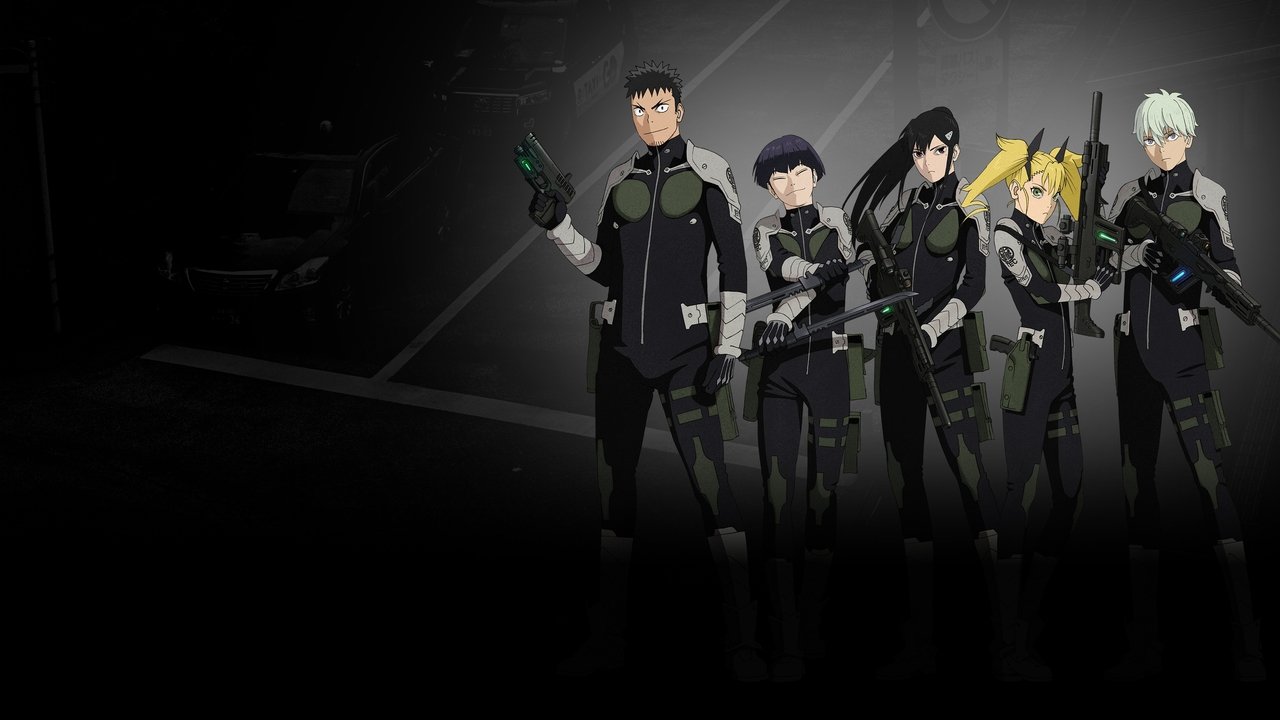
Visually, the show maintains its high standard. Production I.G’s monster work consistently lands the mass and weight of the kaiju in the frame. The integration of CGI and traditional animation continues to be seamless enough that the seam itself isn’t a topic. Color design carries over from the first season — pale gray tones broken by the blue of Defense Force uniforms — and supports the show’s serious register. The premiere’s combat sequence stages large urban-scale geometry alongside helmet-mounted point-of-view shots, repeatedly emphasizing the smallness of human bodies before the kaiju.
The Pop Score
Rating based on impact and craft.
The score by Yuta Bandoh continues to anchor the show’s emotional register. I’ve appreciated this score from the start. Rather than the brass-driven bombast common to monster fiction, the series uses unstable string textures to express the psychological weight of combat. The approach diverges from Attack on Titan’s musical strategy and aligns with the series’ organization-versus-individual thematics.
EXECUTION — The Difficulty of “Exception Within Institution” as a Long Premise
The series’ founding structure — Kafka secretly being the monstrous Kaiju No. 8 while serving in the Defense Force — is a powerful manga hook. Its repeatability over a long run is, however, a known difficulty. The “will-his-secret-be-discovered” suspense erodes through familiarity. Season two appears to address this by enlarging the world rather than tightening the secret.
Organizational structure, inter-base politics, the politics of upper command, foreign defense liaison, the existence of kaiju research institutes — these elements were sketched in season one but are now foregrounded. For readers of the source manga this is the expected progression. For anime-only viewers, the amount of new information arriving in episode one is substantial. It runs the risk of pushing Kafka’s personal arc into the background, and the early episodes will need to handle the rebalancing carefully.
New characters arrive throughout the premiere — fellow operators, antagonist forces, research figures. The script is working hard to introduce them with enough specificity. Episode one is necessarily front-loaded; the integration will become legible only after a few more weeks. I’m willing to wait.
RESONANCE — The Strength of Kafka’s Half-Status
What I find most distinctive about Kafka is that he is neither a fully formed hero nor a fully formed monster — he is a man caught permanently between categories. He joins the Defense Force in his early thirties, well past the genre’s usual age threshold for a protagonist. His monster transformation gives him capability he must constantly suppress. This half-status was the strongest element of season one for me, and it shifts the show out of the standard chosen-one shonen template into something more refracted.
Season two will live or die by how it develops this half-status. The heavier the institution becomes around Kafka, the easier it is for his individuality to become noise. But conversely, the institution gives him a place where his exception can be felt more keenly. The premiere tilts toward the latter possibility. In scenes with Kikoru as captain, with Hoshina, with Shinomiya, Kafka’s burden of “only-I-know” presses harder than it did in season one.
The image that lingered for me was a brief shot near the end of the premiere — Kafka looking into a mirror, and for a single beat human and kaiju outlines overlapping in the reflection. The framing is restrained but it concentrates everything the show is about: a person who cannot put into words, inside an institution, what he is.
DEPTH — A Genre’s Ethics, Inverted
What makes Kaiju No. 8 thematically interesting is that it inverts the kaiju genre’s ethics. Most kaiju fiction frames monsters as external threats to be defeated. This series scrambles that frame by making the protagonist himself a kaiju. The line between “the side that strikes” and “the side that is struck” blurs. Are the kaiju enemies to destroy, or another form of life? This question runs under the surface of the series.
Season two seems prepared to make this question more explicit. The origin of the kaiju, their ecology, their relationship to humans — these are the directions the source manga is heading, and the show’s task is to carry that material into animation. If it does, Kaiju No. 8 will become a series that quietly updates the genre’s grammar. If it doesn’t — if the institutional plotting overwhelms the ethical question — the show will become competent but more conventional.
IMPRESSION — Continuity and Divergence
As a viewer who watched all of season one, my reaction to the premiere is split between “as expected” and “not as expected.” Expected: the visual quality, the music, Kafka at the center, Production I.G’s reliability. Not expected: the explicit shift of weight onto worldbuilding and institutional dynamics. Manga readers will have anticipated this. For an anime-only viewer it requires breath adjustment.
In the long view, this turn is a setup for the series to expand from “Kafka’s personal growth narrative” toward “a civilization-history of humans and kaiju.” If the expansion succeeds, this could be one of the more important kaiju anime of the decade. If it fails, the institutional density will smother the show’s strongest asset, which has always been Kafka. Season two stands at that fork.
CLOSING — Where to Start
It’s possible to enter at season two, but I would recommend starting from season one. The pleasure of this series accumulates through the buildup of Kafka’s half-status, and shared experience of the first season changes how the second registers. For viewers who felt the first season’s institutional context was thin, season two should answer that complaint. I’m keeping it in my weekly rotation.
TEMPERATURE — Rating
WARM
Score: 78/100 (Season 2 Episode 1)
Visual and musical standards from season one carry over, and Kafka’s central position remains intact. Season two takes on the challenge of expanding the world, and the success of the season will depend on how the increased information density resolves over the next few weeks. A rare kaiju anime that takes the institution-versus-individual dilemma seriously.
この記事を書いた人
零(れい)
映画・アニメ・漫画を深く観るための考察ブログ FRAME ZERO の書き手。没入と批評の両立を目指している。感動すると素直に泣くし、演出の粗も気になる。最終的にはいつも人間に興味が行き着く。


コメント