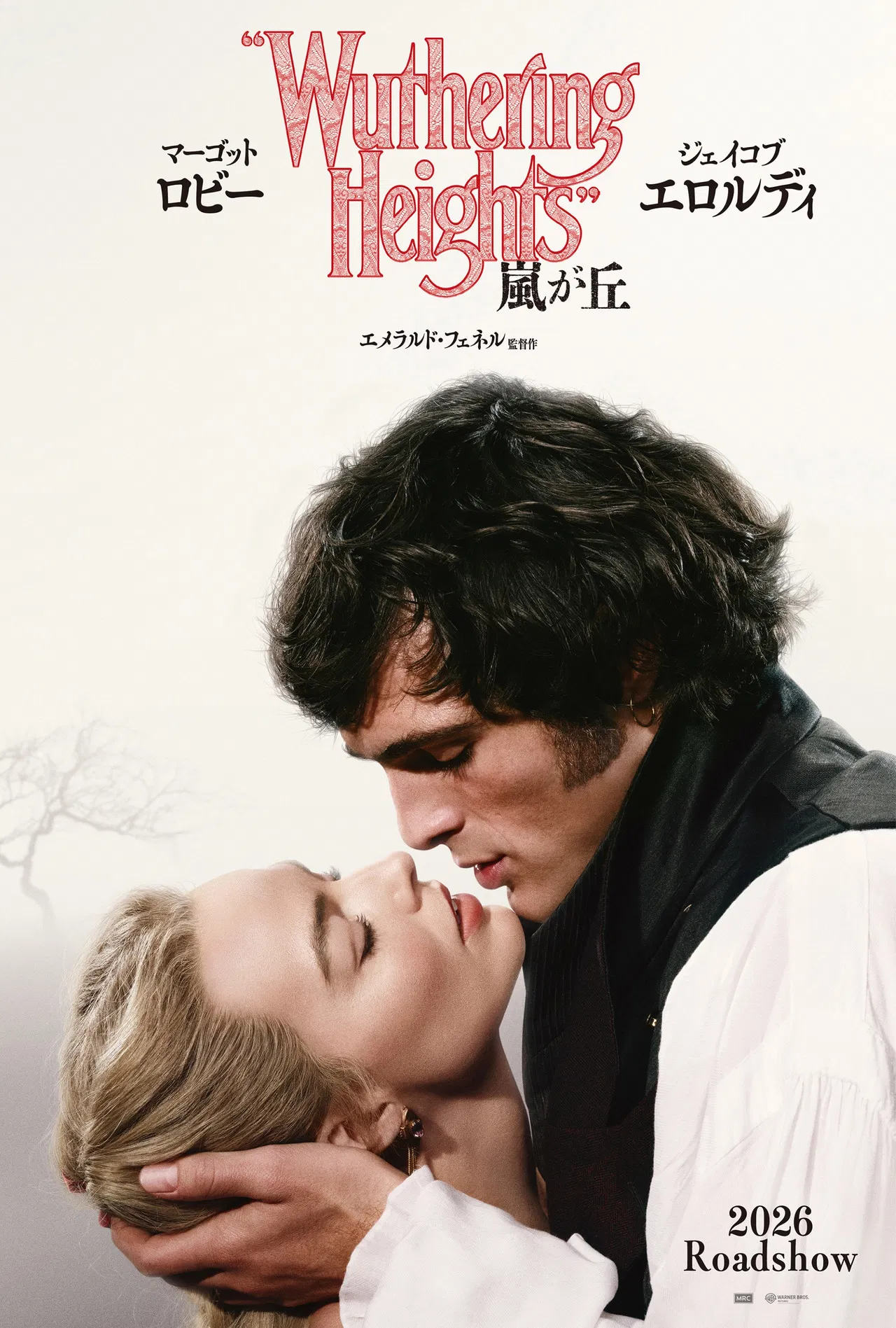
Wuthering Heights has been adapted for film and television more times than any other English novel except, perhaps, Pride and Prejudice. The reason it keeps being made is that the source material contains a problem that no version has fully solved: how do you make an audience feel the pull of Heathcliff’s passion without romanticizing what he actually does?
Most adaptations have resolved this problem by softening Heathcliff — by making his cruelty the legible expression of a wound that love in principle might heal, by casting actors whose physical beauty does some of the emotional work, by giving Catherine’s feeling for him a pathos that excuses the audience for sharing it. Emerald Fennell’s adaptation refuses all of these moves. It is the most honest version of the story I have seen, and honesty requires confronting how deeply uncomfortable the story actually is.
The Pop Score
Rating based on impact and craft.
Jacob Elordi’s Heathcliff
Elordi has the physical presence the role demands, but the film is careful to ensure that presence registers as dangerous rather than romantic. He plays Heathcliff as someone who learned, early and comprehensively, that need was dangerous — that wanting things made you vulnerable — and who has spent the years since converting all his need into control.
The result is a performance about someone whose love has curdled. He loved Catherine. He still loves her, in some sense — but the love has been marinated so long in humiliation and rage that it no longer resembles care. It resembles possession. The film is attentive to this distinction in ways that previous adaptations have not been.
Elordi also makes Heathcliff intelligent in ways that make him more frightening. He understands what he is doing. His cruelties are not the products of blindness or impulse but of calculation. He has worked out exactly how to hurt the people around him, and he applies this knowledge methodically. This is the version of Heathcliff that the novel actually contains, and it is rarer on screen than it should be.
Margot Robbie’s Catherine
Robbie plays Catherine as a woman who knows she is making a choice she cannot undo — choosing social position over Heathcliff — and makes it anyway, for reasons that are not reducible to simple weakness or simple pragmatism. Catherine is not a victim of Heathcliff’s obsession. She participates in its creation. She feeds it, because being the object of that intensity feels like being fully seen.
This is the Brontë novel’s most uncomfortable insight, and Robbie renders it without flinching. Catherine is complicit in what happens. The film does not ask you to forgive her for this. It asks you to understand it — to see how a person might choose being violently loved over being ordinarily content, even knowing the cost.
Fennell’s Direction
Fennell’s first film, Promising Young Woman, was also concerned with the aftermath of obsession — with how romantic myths cover violence, with the long tail of harm that passion inflicts on the people caught in it. Wuthering Heights extends this preoccupation to its ur-text.
The film is shot on the Yorkshire moors with a visual language that refuses to aestheticize them. The landscape is cold and grey and unforgiving — beautiful in the way that things are beautiful when they are indifferent to your presence. It refuses the visual romanticism that other adaptations have used to signal that the feeling between the characters, however destructive, is still grand and therefore meaningful.
Fennell’s argument is that the feeling is not grand. It is a kind of damage. And the moors look like damage looks.
On the Novel’s Central Lie
The Brontë novel is told primarily through Nelly Dean, a servant who was present for the events, and Lockwood, a tenant who arrives decades later. These narrators are unreliable in ways that are not always obvious — they romanticize what they describe, they impose narrative coherence on events that were probably more chaotic, they tell a story in which Heathcliff’s obsession is legible as love.
Fennell’s film strips away this interpretive layer and shows the events more directly. What remains is harder to romanticize. Catherine is not simply a woman doomed by passion. Heathcliff is not simply a romantic hero shaped by injustice. They are two people who damaged each other across decades, and whose damage extended to everyone around them.
The film is not a comfortable watch. It is not intended to be. It is intended to be accurate about what the novel actually contains if you read it carefully — which is an act of considerable courage for a production of this scale.
Wuthering Heights (2025). Director: Emerald Fennell. Starring: Jacob Elordi, Margot Robbie. This review reflects the personal opinion of the author.
この記事を書いた人
零(れい)
映画・アニメ・漫画を深く観るための考察ブログ FRAME ZERO の書き手。没入と批評の両立を目指している。感動すると素直に泣くし、演出の粗も気になる。最終的にはいつも人間に興味が行き着く。


コメント