- VISION — The Excessive Composedness Park Chan-wook’s Frames Always Carry
- EXECUTION — How Decision to Leave Demonstrates Authorial Maturity
- RESONANCE — The Emotional Arc From Oldboy to Decision to Leave
- DEPTH — What “Over-Composedness” Is Asking
- IMPRESSION — Why I Chose Decision to Leave as Entry Point
- CLOSING — How to Approach Park Chan-wook
- TEMPERATURE — Rating
VISION — The Excessive Composedness Park Chan-wook’s Frames Always Carry
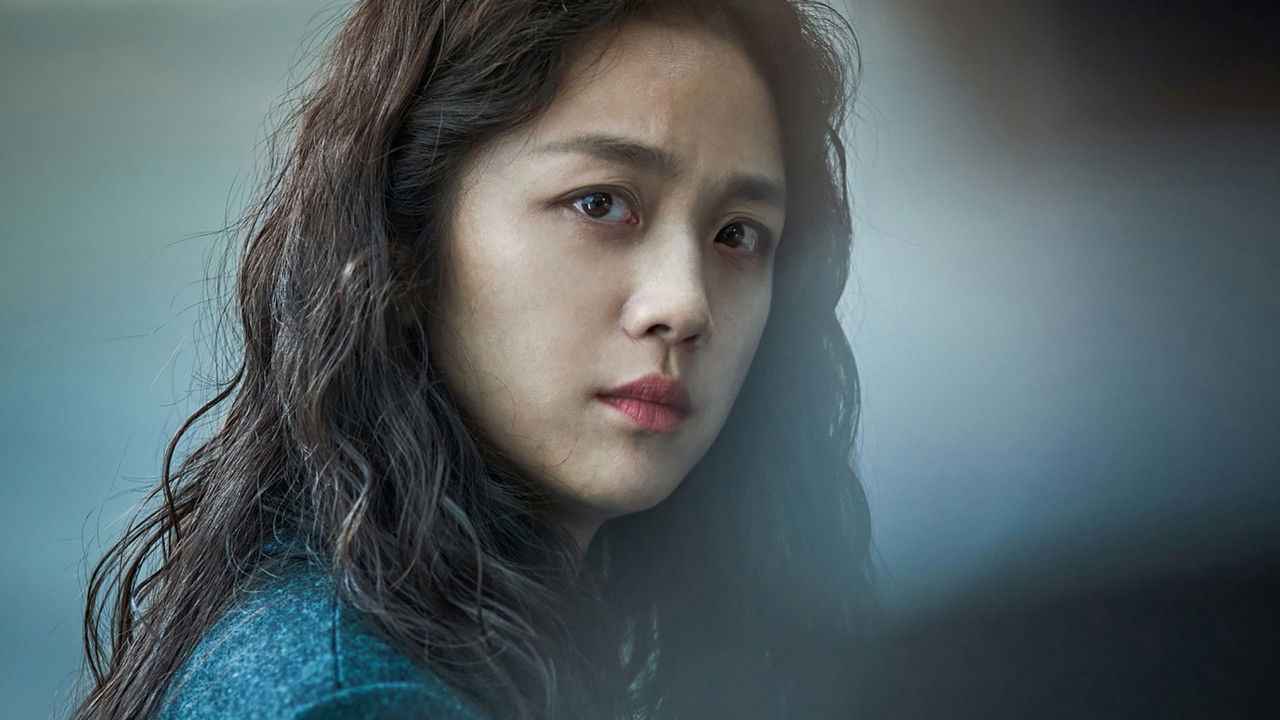
This is a director-focused piece that approaches Park Chan-wook’s body of work through a single starting point: Decision to Leave (2022, Korean: 헤어질 결심). Anyone who has followed his career has noticed a particular quality in his frames — they are unusually composed, the staging is over-determined, the color choices read literarily. The aim here is to articulate this quality through the new film and connect it back to his earlier work.
From the opening mountaineering sequence of Decision to Leave I was already noticing the over-composedness. The texture of the rock face, the flow of the mist, the rhythm of Detective Hae-jun’s movement — all assembled with an almost excessive beauty. As a piece of suspense cinema this can read as slightly off-key; standard procedural drama tolerates more visual disorder. Park does not. His frames arrive as already arranged for the viewer’s gaze.
The Pop Score
Rating based on impact and craft.
This excess of composition is consistent across his earlier work. The corridor long-take with the hammer in Oldboy (2003), the white dress in the opening of Lady Vengeance (2005), the geometric rooms of the estate in The Handmaiden (2016) — none allow disorder. This is not the work of an art director or cinematographer. It is the consequence of an authorial precondition: every element placed in the frame must be calculated.
From a film-aesthetics class I once carried away the Godardian formula “cinema is choice.” In Park Chan-wook the choice is pushed to its limit. There is no corner of the frame that doesn’t carry meaning. Among Korean New Wave directors, this is his most distinctive characteristic.
EXECUTION — How Decision to Leave Demonstrates Authorial Maturity
The screenplay structure of Decision to Leave displays Park’s maturity most clearly. The film centers on Hae-jun, a detective, and Seo-rae, a woman who is both a suspect and the object of his observation. As they continue to observe each other, the difficulty of separating becomes the film’s gravitational force. The puzzle of the suspense plot and the accumulation of romantic feeling proceed in parallel until they cannot be separated.
Note the motif of “watching.” Hae-jun tails Seo-rae, observes her with binoculars, surveils her at home. Seo-rae also watches Hae-jun. The whole film is structured as a circulation of seeing-and-being-seen, and the audience is placed on both sides of that circulation simultaneously. This carries forward the bidirectional seduction structure of The Handmaiden, the self-observation of Lady Vengeance, the mutual surveillance of opposed parties in JSA — refining a long-running motif into its most polished form.
Editing is also unique. The shifts between past and present are extraordinarily fluid; tense often changes within a single shot. As Hae-jun remembers a past Seo-rae, the remembered Seo-rae appears in the frame alongside the present Hae-jun. This is at the leading edge of contemporary tense-manipulation in cinematic language and produces in the viewer a reorganization of time and space. I read it adjacent to the closing scene of Junji Sakamoto’s Face (2000) — both films fold time into space.
RESONANCE — The Emotional Arc From Oldboy to Decision to Leave
Lining up Park’s films chronologically reveals a slow shift in their emotional temperature. JSA (2000) and Sympathy for Mr. Vengeance (2002) are cold revenge tales. Oldboy (2003) traces the limit of rage; Lady Vengeance (2005) sits with the regret that follows revenge. Thirst (2009) leans into Gothic eros. The Handmaiden (2016) introduces female solidarity into the structure of revenge and shows the moment revenge becomes liberation. By Decision to Leave (2022), revenge is no longer the spine — love itself takes center stage, and that love ends not in destruction but in something closer to grace.
This trajectory can be read as authorial maturation, or as a director’s response to changing times, or as accumulated dialogue with international audiences. I think all of these are true at once. Inner change across a director’s twenties through sixties; transformations in Korean society and its film industry; ongoing exchange with viewers around the world — these together altered the emotional temperature of Park’s work. Watching Decision to Leave makes one want to read it as the destination of this long shift.
What affected me most was the seaside ending. Without spoiling specifics, the action Seo-rae chooses and the despair that arrives in Hae-jun share a foundation with Oh Dae-su’s final choice in Oldboy. Both endings are not about revenge or solving the puzzle. They are about the final stance the protagonist takes toward his or her own choice. Park’s films are, ultimately, films about how a person carries themselves at the end.
DEPTH — What “Over-Composedness” Is Asking
What Park’s over-composedness asks of the viewer is the proposition that cinema is not the imitation of reality but its arrangement. His frames are not reality; they are reality with the noise removed and rebuilt by composition and color. Through these arranged frames, viewers see structures that are difficult to perceive in raw life — the direction of desire, the motion of feeling, the gravitational fields between people.
This places Park in a singular position within Asian cinema. Japan’s Hirokazu Kore-eda preserves disorder to capture the real. Taiwan’s Hou Hsiao-hsien offers time itself through long takes. China’s Jia Zhangke layers historical wounds onto geography. Park is different. He arranges the frame to highlight the dramaturgy embedded in the real. The sensibility is closer to theater, which connects to his roots in Korean theatrical culture.
IMPRESSION — Why I Chose Decision to Leave as Entry Point
I chose Decision to Leave as the entry point for this director piece because it is where Park’s over-composedness arrives in its most matured form. In the earlier work, the composedness coexisted with excess — Oldboy’s hammer scene is composed, but it is also excessive. In Decision to Leave the excess has been refined out and only the composedness remains. That is the mark of authorial discipline.
What I’m watching for is what Park does next. The two paths available to him are to refine the composedness further, or to deliberately disrupt it. Either is interesting. I want to see which one he takes.
CLOSING — How to Approach Park Chan-wook
For someone new to Park’s work, I would not recommend starting with Oldboy. It is his signature work, but the youthful excess can read as too strong for current audiences. Beginning with Decision to Leave allows the viewer to read his earlier work backward from the limit of his composedness. This piece was written as that kind of doorway. Reading his filmography as an authorial body is one of the necessary routes to understanding contemporary Korean cinema.
TEMPERATURE — Rating
BLAZING
Score: 93/100 (Decision to Leave alone) / 97/100 (as auteur study)
The destination of Park Chan-wook’s career-long project of arranging the frame. The emotional temperature accumulated across two decades arrives here at its most settled and deepest place. The most appropriate single film from which to re-enter his body of work.
この記事を書いた人
零(れい)
映画・アニメ・漫画を深く観るための考察ブログ FRAME ZERO の書き手。没入と批評の両立を目指している。感動すると素直に泣くし、演出の粗も気になる。最終的にはいつも人間に興味が行き着く。


コメント