VISION — Nine Years Later, the Same Man Returns
I saw the original Accountant in 2016, in my early twenties. Christian Wolff — Ben Affleck’s autistic-spectrum forensic accountant who moonlights as an enforcer for criminal organizations — was a character I had complicated feelings about. The premise sounds clichéd. The “mathematical genius on the autism spectrum” type had already been recycled for nearly thirty years since Rain Man. But the first film had a critical impulse running through it. Christian’s rigid routines, his constraint of affect, the carefully observed sensory sensitivities — these kept the film from collapsing into the easy genius-with-a-disability template.
When Christian appears on screen at the start of the sequel, nine years on, my first impression was that nothing had changed. The same trailer-style mobile home, the same morning ritual, the same mechanical economy of movement. Affleck has held his performance at the same temperature. For viewers of the first film, this is reassurance. It also raises an immediate question: how does the film accumulate nine years inside this character? That’s the burden every sequel inherits.
The Pop Score
Rating based on impact and craft.
Visual texture is a notch darker than the original. The cinematography preserves the muted color design of the predecessor — pale winter light in mid-American towns, the gray of concrete, the yellow lamp inside cars. Action sequences remain plain-spoken: the camera follows the body, CG is held back. I respect this restraint. Sequels usually try to overshoot the original’s scale and fail. This one declines that temptation.
EXECUTION — Recentering the Story on the Brothers
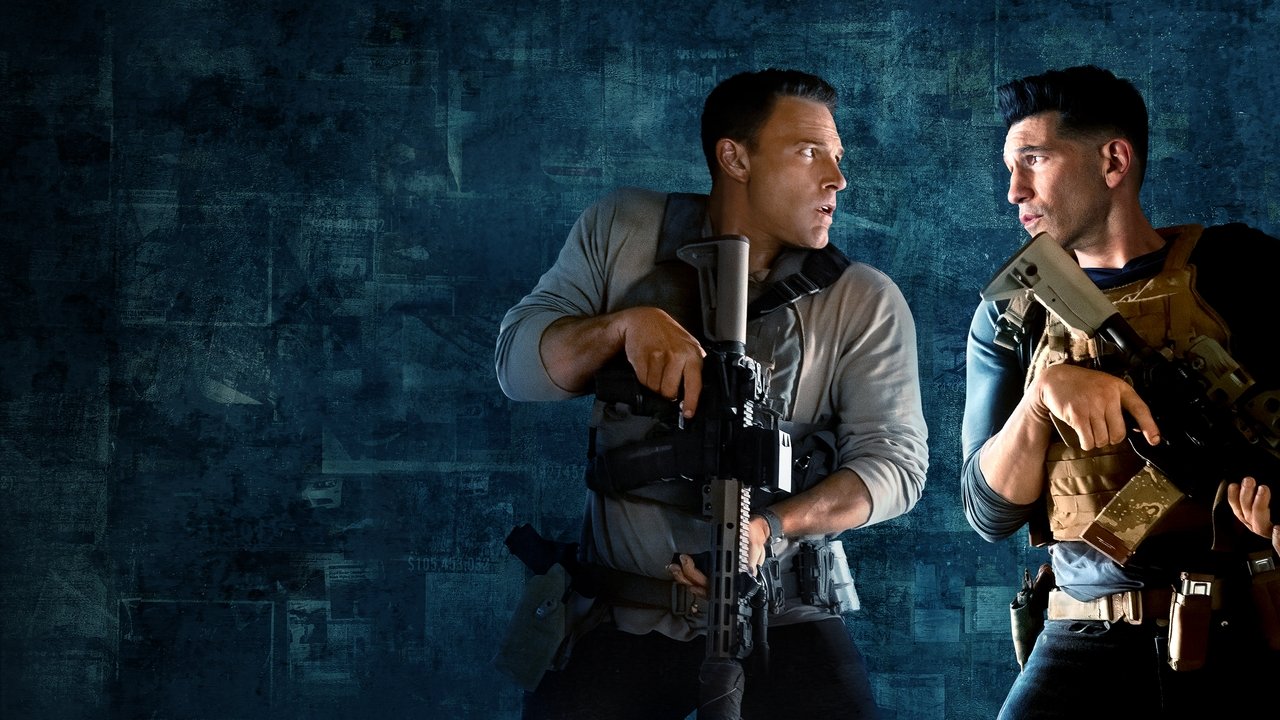
The most consequential structural decision is to shift the center of gravity from Christian alone to Christian and his brother Braxton (Jon Bernthal). Where the original ended on their reunion, this film makes them parallel investigators on the same case. The choice extends the under-developed sibling thread of the first film and weaponizes the contrast — Christian’s logic-driven approach against Braxton’s emotional and physical force — into action set-pieces.
Bill Dubuque returns as screenwriter, which preserves continuity in vocabulary and rhythm. The story is composed in the same register as the original. There is, however, a cost. The first film’s most effective structural device — Agent Medina’s investigative perspective slowly assembling the puzzle — is weakened here. The audience is given both Christian’s and Braxton’s perspectives early, so the mystery loses its pull. The brothers’ relationship drama fills the resulting space. Whether that exchange is a good trade depends on what each viewer wanted from a sequel.
The action design is sturdy. From the first film’s climactic shootout onward, Affleck’s combat movement settled into a recognizable form — direct, unornamented, mechanical. The sequel develops that form into a duo dynamic with Bernthal. Whether the brothers’ rhythms mesh or collide tracks the film’s dramatic temperature. Affleck is now in his fifties, and the agility of younger years is gone, but the heaviness suits the character.
RESONANCE — The Unresolved Question of Representation
My ambivalence about this film hinges on the representation of autistic-spectrum experience. The original showed awareness of this question. Christian’s routines, his sensory sensitivities, the difficulty of social communication — these were rendered as detail, not caricature. Yet the premise of “autistic genius enforcer” stood at a distance from the lived reality of actual people on the spectrum, and that distance was already a subject of critique nine years ago.
The sequel doesn’t go deeper. Christian’s spectrum profile is treated as the previous film treated it; the film does not register the developments in self-advocacy or representational discourse that have unfolded in the intervening nine years. This is the consequence of treating the project primarily as an action sequel. It is also where my expectation diverged from what the film delivered. I had hoped to see the character’s portrait become more dimensional. The sequel mostly does not let it.
That said, in scenes between the brothers, Christian’s difficulty articulating internal states is handled with care. Late in the film, when he tries to tell Braxton something about their childhood and falters mid-sentence, Affleck’s restrained performance lands. That moment alone is worth the seat.
DEPTH — What a Sequel Should Carry
The question every sequel faces is how to update the original’s thematic concerns nine years later. The original’s underlying theme was the search for habitable space, in a violent world, by someone whose neurology departs from the neurotypical default. This sequel compresses that theme into reconciliation with a sibling. Social scope narrows. The accounting world, the corporate-crime architecture, the charity-as-front criminal network — these social dimensions of the original give way to a domestic structure.
One could criticize this. I want to offer the alternative reading. A sequel can either expand a theme outward into society or move it inward into the protagonist. This film chose the inward path. It descends a little further into one man’s interior. The judgment is unflashy and, in its way, honest. The audience’s response will depend on which direction they wanted the expansion to go.
IMPRESSION — Why I Land at Mixed
Walking out, I felt half-satisfied. The action was reliably engaging; the brother-relationship drama landed in the right beats. But the critical impulse that gave the original its specific gravity is dimmer here. The opportunity to update Christian Wolff in light of nine years of changes — in representational discourse, in the actor’s own evolution, in genre cinema’s expectations — has not been fully used. That is the film’s choice. It is not wrong. It is simply not what I had been hoping for.
Several days later, what remains is one late scene between the brothers. With the original, what remained for years was a more diffuse impression — episodes that surfaced unbidden over time. The sequel’s residue feels thinner. That comparison, fair or not, frames my temperature for the film.
CLOSING — Recommended For Whom
If you haven’t seen the first film, see that one first. Trying to grasp who Christian Wolff is from this film alone is difficult. For fans of the original, the sequel functions as a reunion. If meeting the character again after nine years has its own value for you, the sequel earns its place. As an action film it is steady, and as a family drama it works in places. But anyone arriving with the expectation that the sequel will surpass the original deserves to know the temperature in advance.
TEMPERATURE — Rating
MIXED
Score: 72/100
The representational questions raised by the original are not deepened across the nine-year gap; they are compressed into family drama. Action and brotherly choreography are competent. Affleck’s performance and a single late sibling scene are the film’s strongest reasons for being. Worth seeing for fans of the first film who want a reunion. Less satisfying for anyone hoping the sequel would surpass its predecessor.
この記事を書いた人
零(れい)
映画・アニメ・漫画を深く観るための考察ブログ FRAME ZERO の書き手。没入と批評の両立を目指している。感動すると素直に泣くし、演出の粗も気になる。最終的にはいつも人間に興味が行き着く。


コメント