VISION — The Total Animation Effort “Infinity Castle” Demands
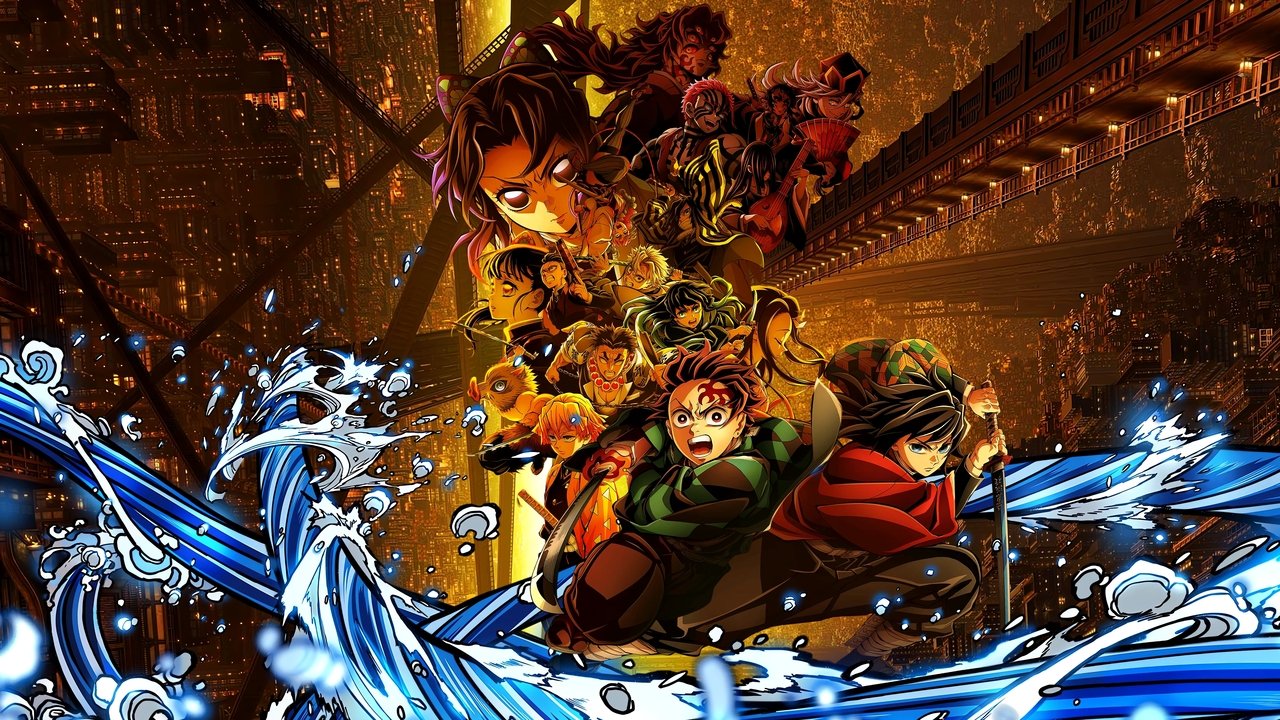
Demon Slayer: Infinity Castle Part 1, produced by ufotable, opened in summer 2025 as the first installment of a three-part theatrical sequence. This piece reads Part 1 as a franchise-orientation article — a guide to what the trilogy’s opening has taken on. The Infinity Castle is the late-stage stronghold of the Upper Moons in the source manga, an interior space that does not fix gravity or orientation in any consistent way. Rendering this space convincingly was effectively impossible within television-scale production, and the theatrical trilogy with full ufotable resourcing was the precondition for attempting it.
My first impression was that the physical texture of the Infinity Castle exceeded my expectations. The overlap of tatami planes, the directional shifts of corridors, the inversions of up-and-down during combat — all of these are constructed through fused 3DCG and traditional drawing. The effects work ufotable has refined across the television runs is here extended into the design of the space itself. The viewer must continually re-establish which direction is which. That continuous re-establishment delivers the dimensional otherness of the Infinity Castle as bodily experience.
The Pop Score
Rating based on impact and craft.
The sound design is built for theatrical specifications. Low-frequency response, spatial localization, and the layering of combat effects all assume a cinema sound system. I saw the film in both standard and 4DX presentations, and 4DX in particular was thorough — seat motion synchronized with the film’s gravity inversions, transferring the on-screen combat into the audience’s body. The match between content and format is unusually complete.
EXECUTION — What “Trilogy” as a Format Means Here
The decision to develop the Infinity Castle arc as a film trilogy carries several rationales. First, the source material is too tightly woven for clean television division. Multiple Upper Moon battles unfold in parallel and influence one another, and breaking that across television’s discontinuous broadcast format would erode the combat’s tension. The theatrical trilogy is the answer to that problem.
Second, the commercial calculation is straightforward given Mugen Train’s historic box office. Stretching the Infinity Castle arc into three films rather than compressing it into one is economically rational. Critics of this choice exist. My reading is that the choice has not damaged the work’s quality. Part 1 is paced with appropriate room for both character relationships and combat.
Third, the trilogy format reflects ufotable’s production-resource constraints. Concentrating every cut into a single long feature would strain quality maintenance. Splitting into three permits maximum resourcing per chapter. The line work and animation density of Part 1 are visibly steady at a level beyond television and beyond the previous theatrical entries. That stability is a function of the format.
The screenplay adapts the source manga closely while adding a clean theatrical introduction. The opening reorients the viewer from the Hashira Training Arc into the Infinity Castle’s beginning, which serves both manga readers who have not finished the television run and theatrical-only audiences arriving without that background.
RESONANCE — The Weight Part 1 Carries
Part 1 centers a particular Hashira-against-Upper-Moon confrontation. Without spoiling specifics, the combat carries the accumulated weight of its Hashira’s full personal history. One of the consistent strengths of Demon Slayer is that both demon antagonists and Demon Slayer protagonists arrive with carefully built backstories and motivations. Part 1 collects that accumulation and resolves substantial parts of it inside its central battle.
Watching this structure I think of the Noh shura mono, the warrior-ghost form in which the spirit of a fallen warrior reappears, replays his lifetime battle, and is gradually released. Demon Slayer’s combat — particularly when it incorporates a demon’s lifetime memories — repeatedly takes this shura mono shape. At the moment a demon dies, his pre-demon human history floods in, and the audience receives a compressed life. Part 1 inherits and deploys this form fully.
The voice cast continues to anchor the work’s emotional weight. Each performer takes on the responsibility of bringing long-running characters to a theatrical stage. The detailed breath work during combat — the kind of audio detail that television editing can compress — is fully preserved here, and that preservation is one of the quiet pillars of combat realism.
DEPTH — The Inheritance of “Demon Sorrow”
What distinguishes Demon Slayer from other battle-oriented shonen is its insistence on rendering the demons’ sorrow. Demons are not simple villains; they were once human, and their transformation traces back to despair, rage, or loss. The moment a Demon Slayer kills a demon is the moment that demon’s pre-conversion human story is delivered as flashback, and the audience is asked to hold sympathy for the antagonist’s prior self. This is structurally different from standard shonen antagonist work.
Part 1 inherits this thematic commitment in the franchise’s largest combat. The Upper Moons’ backgrounds are revealed inside their fights. Even when their choices are wrong, the texture of the despair leading to those choices is shown with care. This approach is the inverse of “satisfaction-of-defeating-the-enemy” cinema. It leaves complicated feeling. I expect this thematic spine to be the moral core of the entire trilogy.
IMPRESSION — Part 1 as Trilogy Opening
By the end of Part 1 my anticipation for the rest of the trilogy was raised — which is exactly what an opening installment should achieve. The film generates clear pull toward the next chapter. As a standalone work, Part 1 is also satisfying, with an internally completed combat and clean closure for Part 1’s specific battle.
The remaining task for Parts 2 and 3 is sustaining the standard. Visual quality, combat intensity, and emotional weight need to hold across all three chapters. Given ufotable’s track record, I believe this is achievable. Following the trilogy through its conclusion has become one of my anticipated pleasures of the next two years.
CLOSING — Recommended For
Fans of the television series and Mugen Train need no recommendation — this is a required film. Theater conditions matter; see it on a real screen with proper sound. For franchise newcomers I would not recommend entering at Part 1 cold. Watch the television series through the Hashira Training Arc first, then arrive here. We are inside the period in which Demon Slayer is moving toward conclusion in real time, and that is a thing worth showing up for.
TEMPERATURE — Rating
BLAZING
Score: 90/100
Justifies the trilogy format on both commercial-rationality and quality-of-work grounds. ufotable’s full theatrical-scale animation and sound succeed in delivering the Infinity Castle as bodily experience. A near-ideal opening installment that raises stakes for the chapters to come.
この記事を書いた人
零(れい)
映画・アニメ・漫画を深く観るための考察ブログ FRAME ZERO の書き手。没入と批評の両立を目指している。感動すると素直に泣くし、演出の粗も気になる。最終的にはいつも人間に興味が行き着く。


コメント