VISION
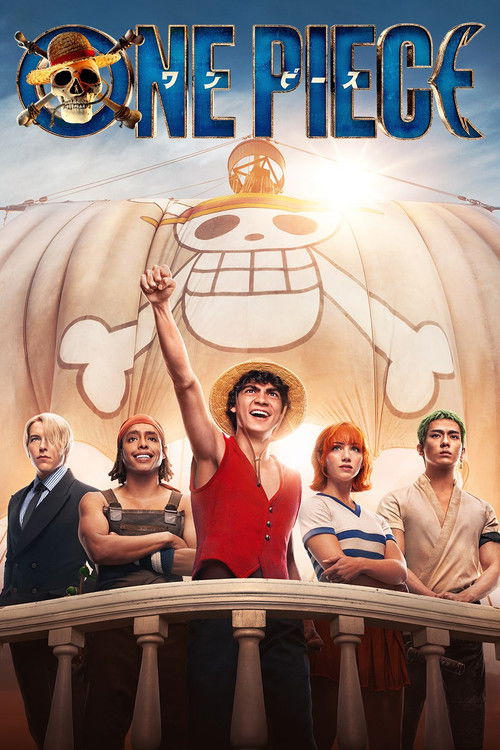
When the Netflix live-action adaptation of ONE PIECE premiered in August 2023, it achieved something that few manga-to-screen conversions ever accomplish. International viewership numbers, critical acclaim, and a greenlit season two. By any measure, it was an unprecedented success for a live-action manga adaptation. Yet, in that moment of triumph, the entire Japanese film and television industry seemed to embrace a dangerous misconception: “If ONE PIECE can be adapted, then any Jump manga can be.” This deceptively simple logic would prove far more consequential than anyone anticipated.
To understand why ONE PIECE’s live-action version succeeded, we must look beyond surface explanations. Yes, it was based on a globally popular manga. But that alone cannot explain the outcome. What made the difference was Eiichiro Oda’s unusually deep involvement in the production process, not merely consultation, but hands-on participation in scriptwriting and directorial decisions. The production budget was staggering by Japanese standards, and the creative team approached the central question of live-action adaptation with genuine seriousness: “What is the essence of this story, and how do we preserve it in live-action form?” In other words, ONE PIECE’s success was the result of exceptional conditions aligning simultaneously. It was an anomaly, not a blueprint. Yet the industry immediately began treating it as a formula. IP Animation Boom
The Pop Score
Rating based on impact and craft.
EXECUTION
From 2024 onward, live-action and screen adaptations of Jump manga have been greenlit at an unprecedented pace. Dragon Ball, Saint Seiya, My Hero Academia, Demon Slayer, Jujutsu Kaisen. The announcements have come so frequently that tracking them all has become difficult. Most of these projects invoke ONE PIECE’s success as their conceptual foundation, as if invoking a spell that guarantees success. Mickey 17
Yet the actual critical reception of completed works tells a starkly different story. The 2025 Dragon Ball live-action film was panned by critics internationally. The adaptation’s failure to grasp the fundamental challenges of translating manga to screen was evident in every frame. The Saint Seiya live-action project, despite securing an acclaimed director, encountered script problems during production that the trades reported with increasing frequency. Scheduling delays. Budget overruns. Fundamental confusion about the project’s direction. None of these problems occurred on the set of ONE PIECE.
The pattern is unmistakable. Success has not been replicated; instead, its absence has become the norm.
RESONANCE
Understanding this requires returning to the fundamental conditions that enabled ONE PIECE’s success. Eiichiro Oda’s involvement went far beyond the typical “author consultation” model. He participated in script revisions, design approvals, and creative problem-solving at every stage. This level of author engagement was unprecedented for a live-action adaptation of this scale. Oda, harboring understandable anxieties about the live-action format, essentially placed himself in the position of guarantor for the project’s fidelity to his creation. This extraordinary commitment rippled through every production decision.
The budgetary scale was equally exceptional. The investment Netflix committed to ONE PIECE’s production far exceeded that of any Japanese film or drama produced in the same period. This manifested in every aspect, the choice of international filming locations, the intricacy of set design, the caliber of talent acquired for secondary roles. Money alone does not guarantee quality, but in the case of an ambitious adaptation, insufficient resources virtually guarantees failure.
Crucially, the creative team made deliberate choices about what to adapt and what to omit. Rather than attempt a comprehensive translation of the manga’s narrative and visual language into live-action, they made strategic selections. Certain elements, visual gags, manga-specific narrative shortcuts, stylistic flourishes, were recognized as inherently tied to the manga medium and were either simplified or discarded entirely. In their place, the team concentrated its efforts on the elements that live-action could genuinely enhance: the grandeur of the adventure, the micro-expressions of characters’ faces, the spatial and architectural realization of foreign worlds. This discipline, knowing what to foreground and what to sacrifice, is the crux of successful adaptation.
DEPTH
What has the Japanese film and television industry absorbed from ONE PIECE’s success in the two and a half years since its release? The answer, unfortunately, approximates zero. If anything, the opposite has occurred. Witnessing ONE PIECE’s triumph, numerous production companies and studios have deepened a shallow conviction: “Jump manga are adaptable into live-action.” This confidence is entirely divorced from the deeper interrogation of why ONE PIECE succeeded. The question of what story to tell, how to honor the source material’s particular strengths while acknowledging live-action’s constraints, has been largely abandoned in favor of simple greenlight-and-execute thinking.
Monitoring the concurrent live-action projects currently in development reveals a consistent pattern of fundamental misunderstanding. Insufficient time is devoted to scriptwriting and conceptual development before production begins in earnest. The original authors’ involvement, where it exists, remains ceremonial rather than substantive. Production budgets, while substantial, are rarely scaled to match the ambition of the planned project. And most critically, the foundational question, “Why is this particular story being adapted, and what form should that adaptation take?”, remains largely unexamined as projects proceed.
This is the moment to confront an uncomfortable truth. Manga and live-action film operate according to fundamentally different grammars. Manga is an art form built on the active participation of the reader’s imagination. It deploys exaggerated postures, fantastical character designs, radical shifts in facial expression and emotional intensity. These are not compromises in manga; they are superpowers. They work precisely because the reader’s eye and mind collaborate in filling the spaces between panels and inferring motion from static images.
When these same elements migrate to live-action, the risk of aesthetic disaster is acute. An exaggerated pose that reads as dynamic power in manga can appear ridiculous when embodied by a human actor in three-dimensional space. A hairstyle designed to be visually striking on the page can seem absurd on screen. The gap between the two formats is not merely technical; it is ontological.
ONE PIECE succeeded in part because the production team devoted extraordinary energy and ingenuity to bridging this gap. The way Luffy moves, the design of character costumes, the integration of CG and practical effects, the composition of scenes in space, all of these functioned as meticulous, considered responses to a single problem: “How do we translate the visual and kinetic language of manga into live-action without losing either the original’s charm or the integrity of the new medium?” The answer could not have been arrived at through formula or precedent. It required genuine creative problem-solving.
By contrast, failed live-action manga adaptations typically struggle precisely here. Casting choices that disregard the source material’s character archetypes. Costumes faithfully recreated from the manga but appearing ridiculous when worn by actual human beings. Overreliance on CGI that destroys believability, or conversely, an aesthetic so grounded in realism that the original story’s magic evaporates. This oscillation between poles, reflecting fundamental confusion about the project’s direction, lies at the heart of adaptation failure.
IMPRESSION
Multiple new live-action Jump adaptations are currently in advanced stages of production. What most concerns me is a kind of overconfidence permeating these projects. “If ONE PIECE demonstrates anything, it’s that we can do this.” Under the banner of this conviction, meticulous collaboration between production teams and original creators has become secondary. Schedule imperatives have taken precedence over thoughtful preparation.
The financial pressure applied by international streaming platforms is also acute. Investor expectations for “another ONE PIECE-scale international phenomenon” have inflated production budgets while simultaneously compressing preparation timelines. This creates a paradox: the larger the production, the more preparation time is necessary, not less. The stakes demand it. A billion-yen failure is more consequential than a hundred-million-yen failure.
I hesitate to make predictions, yet the signs are difficult to ignore. Many of the live-action Jump adaptations scheduled for release in 2026 and 2027 will almost certainly fail to match ONE PIECE’s success. Some may not even match commercial expectations. And when that failure is analyzed, its true cause will likely be overlooked: the industry’s fundamental misunderstanding of why ONE PIECE succeeded in the first place.
At a moment when Japanese animation and manga culture carries genuine international prestige, the live-action adaptation industry faces a reckoning. The assumption that popularity plus production budget equals successful adaptation no longer suffices. What is required instead is a return to first principles: How can we deepen and illuminate the original work through the particular capabilities of live-action cinema, rather than merely translating it?
ONE PIECE’s live-action success emerged from precisely this kind of rigorous interrogation. Eiichiro Oda’s involvement was deep and uncompromising. The creative team’s decisions were made with meticulous discipline. The production investment was transformative in scale. These three elements, when combined, created the conditions for success. But these conditions cannot be universally applied. For the vast majority of new projects, meeting them is practically impossible.
What the industry must instead do is not reduce the number of adaptation projects, but rather demand that those undertaken meet these exacting standards, or be abandoned. If ONE PIECE’s success is to be treated not as an anomaly but as an achievable model, the industry must first truly comprehend that model’s demands.
CLOSING
Writing this column, I am aware of the complexity of my own emotional response. The excitement and wonder I felt watching ONE PIECE’s live-action premiere remain vivid. My respect for every person who contributed to that film’s realization is unwavering. And yet, simultaneously, I feel a profound disappointment that the film’s success has generated an atmosphere of misplaced optimism across the entire industry. There is a “wished-for but unrealized” quality to my feelings about these new projects. Each time a new live-action adaptation is announced, I hope it will be made with integrity and clarity of purpose. But observing how these projects actually unfold, I find my hope diminishing.
ONE PIECE is unquestionably a masterwork. But precisely because it is a masterwork, every subsequent adaptation it has inspired carries the impossible burden of expectations it has created. The hope that the industry will grasp this weight is all I can offer.
TEMPERATURE
But is live-action adaptation truly futile? No. ONE PIECE has demonstrated that the endeavor is possible. Yet the conditions for success are explicit and non-negotiable. The original author’s substantive involvement. Massive production investment. Rigorous interrogation of what live-action cinema can and cannot accomplish. When these three factors align, adaptation succeeds.
Conversely, in the current landscape, no alternative path to success exists. The failures will continue until international streaming platforms and production companies grasp this reality. But should that understanding eventually take root, another ONE PIECE-scale success is not impossible. Without belief in that possibility, the industry has no future worth imagining.
この記事を書いた人
零(れい)
映画・アニメ・漫画を深く観るための考察ブログ FRAME ZERO の書き手。没入と批評の両立を目指している。感動すると素直に泣くし、演出の粗も気になる。最終的にはいつも人間に興味が行き着く。


コメント